Melbourne's Fastest Nang Delivery Service

Heavy cream isn’t sold in Australia. The closest equivalent is pure cream at around 40% milk fat, or thickened cream at 35%. If an American recipe calls for heavy cream or heavy whipping cream, either will work — thickened cream is easier to whip, pure cream tastes cleaner.
That’s the short version. The longer version matters if you’re whipping, because Australian cream is labelled by a completely different system to the American one, and the label tells you less than you’d think.
Fat is the number that decides everything. It’s what traps air when you whip, so it’s the only figure worth reading on the tub.
| Cream | Milk fat | Whips? | Use it for |
|---|---|---|---|
| Double cream | at least 48% | Very easily — too easily | Spooning over desserts, rich sauces |
| Crème fraîche | 38–48% | Not really | Cultured, tangy. Sauces and toppings |
| Pure cream | around 40% | Yes | Whipping, cooking, anything |
| Thickened cream | 35% | Yes, most reliably | Whipping, piping, cakes |
| Long-life cream | 35% | Yes | Same as thickened, longer shelf life |
| Pressure packed (aerosol) | at least 25% | Already whipped | Convenience only |
| Canned cream | 21% | No | Pouring |
| Light thickened cream | around 18–20% | Poorly, and it collapses | Pouring, coffee, some sauces |
The practical cutoff is about 30% fat. Below that, there isn’t enough fat to build a stable structure around the air you’re beating in, so it froths and then falls. This is the single most common reason cream “won’t whip” — the cream was never going to.
Same fat range, one real difference: thickened cream has a stabiliser in it, usually gelatine or a vegetable gum. Pure cream is cream and nothing else.
The stabiliser does two things. It makes the cream whip faster and more forgivingly, and it makes the whipped result hold its shape for longer before weeping. That’s why thickened cream is the default in Australian supermarkets and why most local recipes assume it.
Pure cream tastes better. It’s cleaner and less coated on the palate, and if you’re serving something where the cream is the point — a pavlova, a good trifle — the difference is noticeable. It’s slightly less forgiving to whip and it won’t hold as long once whipped.
Our rule of thumb: thickened cream if it needs to sit, pure cream if it’s going straight to the table.
American cream names describe fat bands that don’t line up with ours. Here’s the conversion.
| American recipe says | Buy this in Australia |
|---|---|
| Heavy cream / heavy whipping cream (36%+) | Thickened cream or pure cream |
| Whipping cream (30–36%) | Thickened cream |
| Double cream (UK, 48%) | Double cream |
| Light cream (18–20%) | Light thickened cream |
| Half-and-half (10–12%) | No equivalent — mix full cream milk with a splash of pure cream |
| Single cream (UK, 18%) | Light thickened cream, or milk and cream mixed |
One thing worth knowing: American heavy cream is often ultra-pasteurised, which makes it whip more slowly than Australian thickened cream. If a US recipe tells you to beat for five minutes and yours is done in two, trust your eyes, not the timer.
Thickened cream. It’s the most reliable thing on the shelf, and if you’re piping onto a cake that has to survive a warm room, the stabiliser earns its place.
Pure cream, whipped to soft peaks. Pavlova cream should slump slightly rather than stand up — you want it to settle into the meringue, not sit on top of it like frosting.
Pure cream or a cooking cream. Higher fat is more stable in a hot pan; low-fat creams split. Thickened cream works but the gums can go slightly gluey when reduced hard.
Light thickened cream, or full cream milk. Anything at 35% is too heavy and will sit on top rather than mixing in.
Assuming you’ve bought cream above 30% fat, three things decide the result.
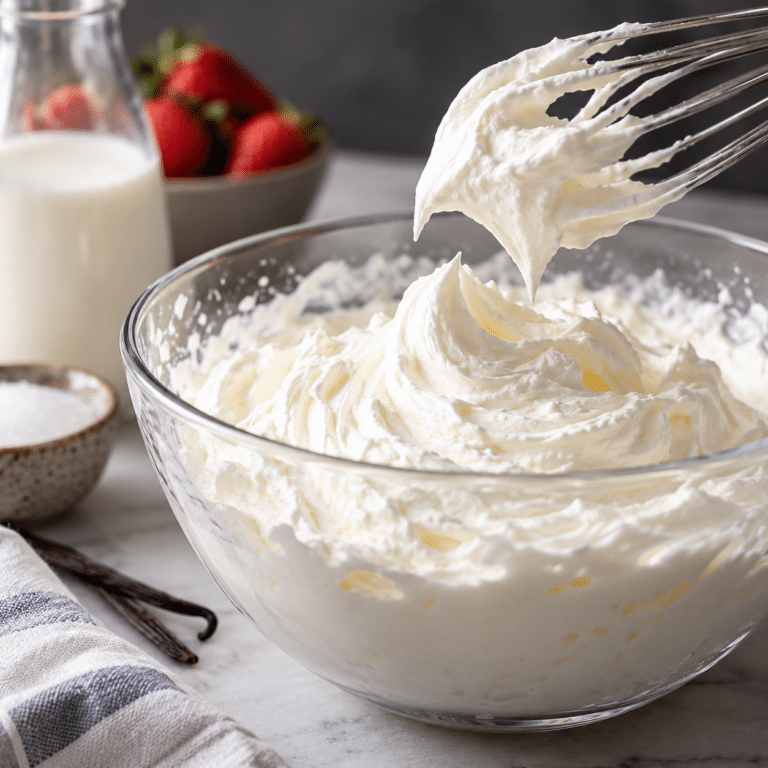
Temperature. Cream whips because cold fat globules clump around air bubbles. Warm cream can’t do it. Straight from the fridge, and on a hot day chill the bowl and the beaters too. If your kitchen is above about 25°C, this stops being optional.
Knowing when to stop. Soft peaks flop over when you lift the beater. Stiff peaks hold. Past that, the fat keeps clumping and you get butter — grainy, yellowish, and not recoverable by beating more. If you’ve just tipped over the edge, fold in a splash of unwhipped cream by hand and it usually comes back.
When you add the sugar. Add it once the cream has thickened slightly, not at the start. Sugar added too early interferes with the structure and you’ll beat for longer to get less volume.
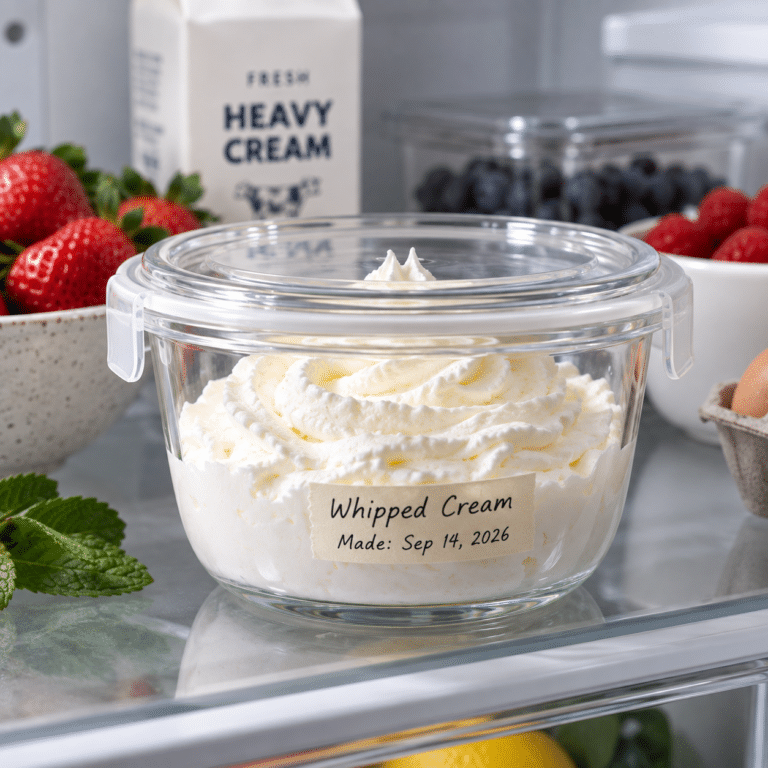
Whipped cream made with a mixer starts weeping within a few hours, and by the next day it’s a puddle. That’s the air escaping — beaten-in air bubbles are large and unstable, and gravity wins.
A charged cream whipper works differently. Nitrous oxide dissolves into the fat under pressure, then expands into millions of very small bubbles as it leaves the nozzle. Smaller bubbles, more evenly distributed, held in a fat structure that hasn’t been mechanically battered. Cream made this way keeps in the fridge for up to two weeks and dispenses fresh each time, with no stabilisers or preservatives added.
It also means you stop guessing about peaks. There’s no window to miss and no butter to make by accident.


If you’re weighing that up, our guide to cream whippers and dispensers covers the sizes, and how to use cream chargers covers the method.
Close enough to substitute one for one. Australian thickened cream is 35% milk fat against American heavy cream’s 36% or more, and thickened cream has a stabiliser added. For any recipe calling for heavy cream, thickened cream works.
Yes — it’s the easiest cream in the supermarket to whip, because the added stabiliser does part of the work for you. Light thickened cream is a different product at around 18–20% fat and won’t hold a peak.
No. Double cream is at least 48% milk fat against thickened cream’s 35%. It’s much richer, whips in seconds, and turns to butter almost as fast — watch it closely if you’re whipping it at all.
Pure cream is around 40% fat with nothing added. Thickened cream is 35% with gelatine or vegetable gum for stability. Pure cream tastes better; thickened cream holds better.
Almost always one of two things: the cream is under 30% fat, or it isn’t cold enough. Check the tub first — light thickened cream and canned cream can’t be whipped no matter what you do.
Thickened cream for reliability and holding power. Pure cream for flavour, if it’s being eaten soon after.