Melbourne's Fastest Nang Delivery Service

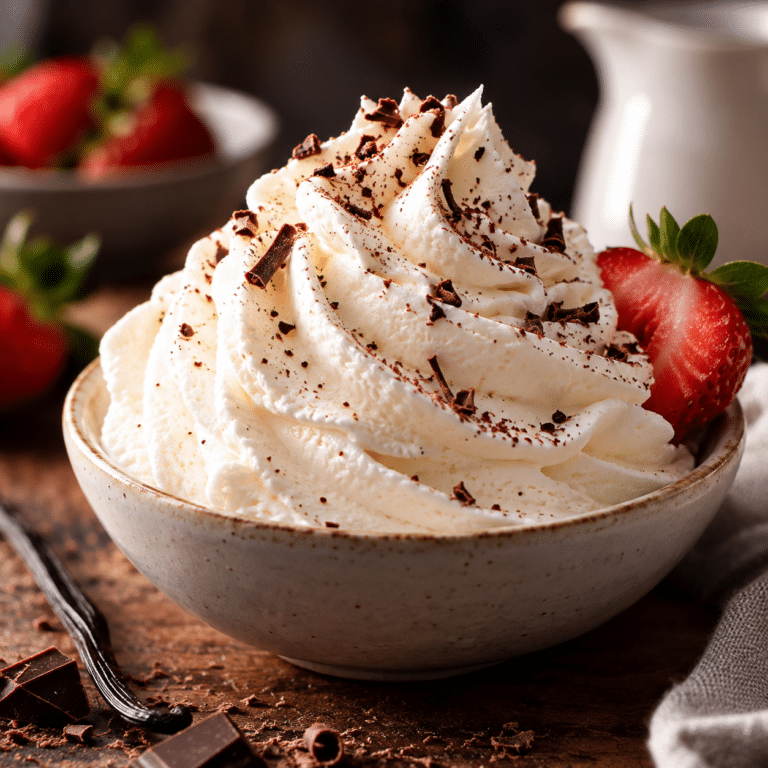
Chantilly cream is whipped cream sweetened with sugar and flavoured with vanilla. That’s it. Crème Chantilly in French kitchens means cream whipped to soft peaks with roughly 10% of its weight in sugar and a little vanilla — the version served with profiteroles, mille-feuille and berries.
If you’ve ever whipped cream with a spoonful of icing sugar and a splash of vanilla, you’ve made chantilly. The name just sounds like it should be harder.
Plain whipped cream is cream and air, nothing else. It’s the neutral version that goes into savoury applications or gets folded into a mousse where the sugar comes from somewhere else.
Chantilly is the sweetened, vanilla-scented version, and it’s usually taken only to soft peaks. In classical patisserie it’s a component with a defined role — the cream that fills a choux bun or sits under fruit — rather than a topping you dollop on at the end.
| Whipped cream | Chantilly cream | |
|---|---|---|
| Sugar | Optional | Always, around 10% by weight |
| Vanilla | Optional | Yes, traditionally |
| Peak | Whatever the recipe needs | Soft, usually |
| Used for | Anything | Filling and finishing pastries and desserts |
The Château de Chantilly, north of Paris. The usual story credits François Vatel, maître d’hôtel there in the 1600s, with inventing it — a story that’s almost certainly not true, since sweetened whipped cream appears in recipe books well before his time. What the château genuinely did was make it famous. Its dairy served the cream to visitors through the 18th century and the name stuck.
Worth knowing if you’ve ever wondered why a French château is attached to a bowl of whipped cream.
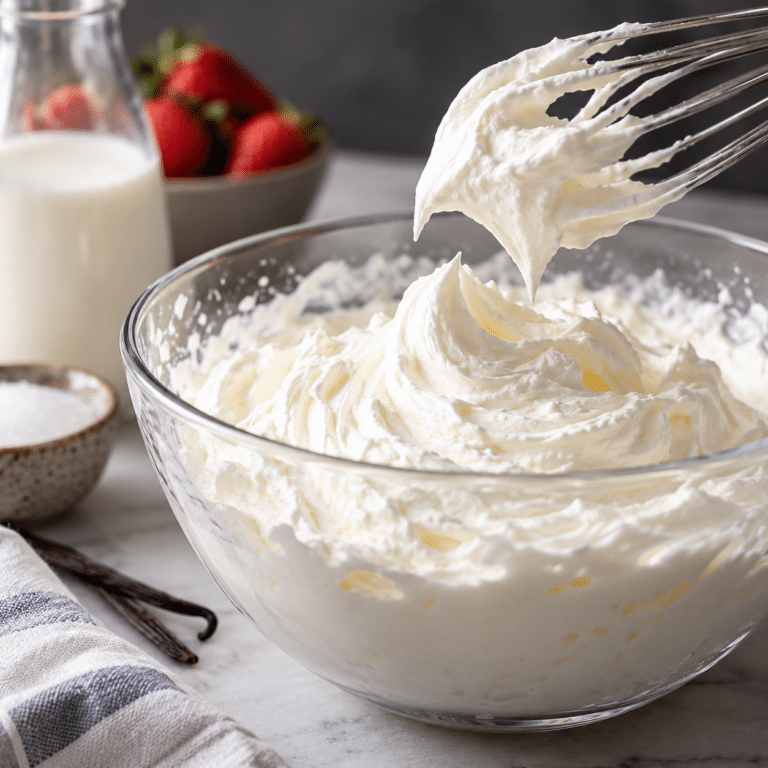
Chill the bowl and beaters. Beat the cream on medium until it starts leaving faint tracks. Add the sugar and vanilla, then beat until it holds a soft peak — the tip should flop over when you lift the whisk. Stop there.
The 10% sugar ratio is the traditional one and it’s worth keeping. Chantilly should read as barely sweet against whatever it’s served with, not as a dessert in itself. If you’re pairing it with something already sweet — a caramel tart, a sugared meringue — drop to 20g.
Vanilla pod seeds are noticeably better than extract here, and visible in the finished cream, which is part of the appeal. Extract is fine on a weeknight.
Soft peaks are the target, and this is where most home versions go wrong. Chantilly that stands up stiffly has been over-whipped for its purpose — it should slump gently and spread under its own weight when spooned.
Finish the last twenty seconds by hand with a whisk. You’ll feel the moment it comes together, which you won’t with a mixer running.
If it’s going into a piping bag for éclairs or a layered dessert, take it a little further — to medium peaks — because it will loosen slightly as it’s worked through the bag.
Chantilly made in a mixer is at its best in the first hour and noticeably tired after three. For a dinner party that’s fine. For a cake that has to sit, or service across an evening, it isn’t.
The classical fix is a little gelatine or mascarpone folded through. The kitchen fix is a cream whipper: cream, sugar and vanilla into the canister, one N₂O charger, ten shakes. The nitrous dissolves into the fat and expands into much finer bubbles on dispensing, so the cream holds its structure for up to two weeks in the fridge and comes out fresh each time.
It also solves the soft-peak problem, since there’s no peak to judge — it dispenses at the same consistency every time.


Profiteroles and éclairs, where it’s the filling. Mille-feuille, layered with pastry. Fresh strawberries and raspberries, which is where the 10% sugar ratio makes most sense — enough to lift the fruit without competing with it.
Also good on scones alongside jam, on a warm chocolate pudding, folded into a trifle layer, or on the side of anything with stone fruit. For pavlova, chantilly works but many people prefer unsweetened cream against the meringue.
More on peaks and technique in our complete guide to making whipped cream.
Cream, sugar and vanilla, whipped to soft peaks. Around 10% sugar by weight is the traditional ratio.
Chantilly is sweetened and vanilla-flavoured whipped cream. All chantilly is whipped cream; not all whipped cream is chantilly.
In Australia, thickened cream or pure cream. Pure cream tastes cleaner and suits a dessert where the cream is the point; thickened cream holds longer.
A few hours in the fridge before it starts weeping, and it needs a gentle re-whisk after that. Made in a charged cream whipper it keeps for up to two weeks.
The French is roughly “shon-tee-yee”. In Australian kitchens “shan-till-ee” is what you’ll usually hear and nobody minds.